From AI Governance to Governance Capacity
Preparing Institutions for the Next Phase of AI
Artificial intelligence is no longer just a technological challenge. It is becoming an institutional one.
In 2026, nearly 40 researchers from across KU Leuven joined a cross-faculty Generative AI foresight initiative hosted by the Media, Culture & Policy Lab, MintLab and DigiSoc in Belgium. Rather than focusing on AI governance alone, the initiative explored a broader challenge: how institutions can develop the capacity to anticipate and navigate technological disruption before it outpaces decision-making. The pilot marked an important step towards a new institutional approach that combines interdisciplinary expertise with structured foresight.
The objective was not to predict the future of AI.
It was to explore how institutions can become better prepared for multiple AI futures.
Instead of an open discussion, we applied a structured foresight methodology based on the Archer Model. The process moved participants from initial uncertainty towards systematic exploration of emerging risks, opportunities, tensions and strategic choices.
One insight became increasingly clear.
The greatest challenge may not be AI itself.
It is whether institutions possess the capacity to anticipate, interpret and respond before disruption outpaces decision-making.
Traditional governance often reacts after change has already happened. Generative AI requires something different: governance capacity built through collective intelligence, interdisciplinary dialogue and strategic foresight.
This pilot demonstrated that meaningful conversations emerge when researchers from different disciplines share a common methodological framework rather than simply exchanging opinions.
The initiative is only the beginning.
The next phase will scale this approach further, extending participation, strengthening institutional learning and exploring how foresight can become a permanent capability rather than an occasional exercise.
Because in the age of Generative AI, the competitive advantage of institutions may not be better predictions.
It may be better preparedness.
Acknoweldgement
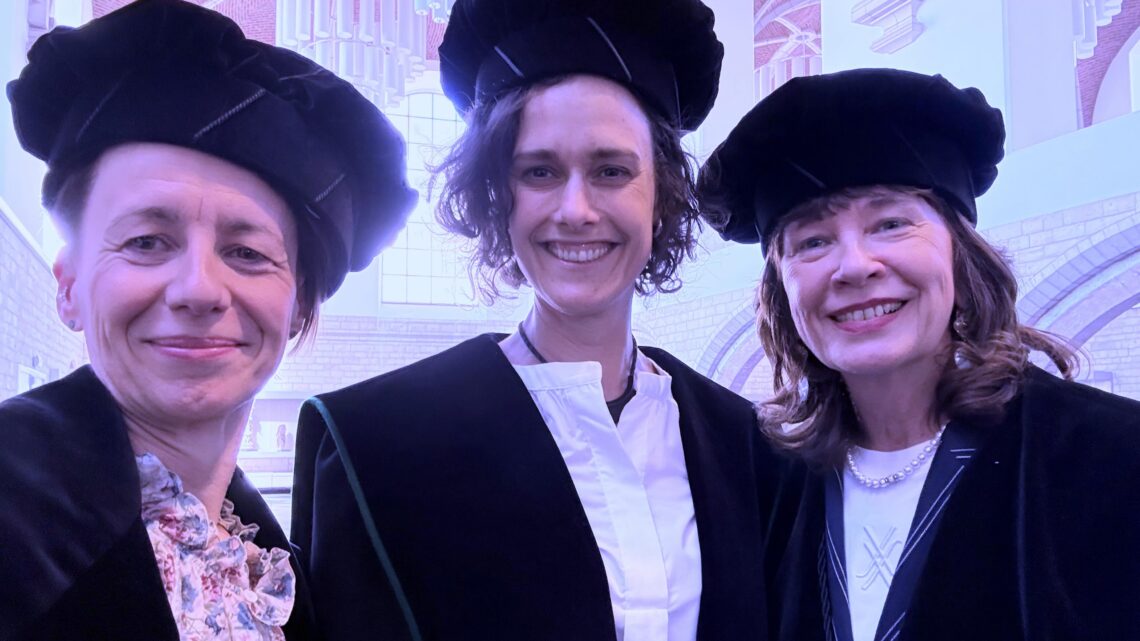
Finally, my sincere thanks to Leen d’Haenens and Bieke Zaman for their collaboration and trust throughout this initiative and to the colleagues from across KU Leuven and Leuven AI whose diverse perspectives transformed a genuinely interdisciplinary foresight exercise.